Book-to-screen adaptations have long served as a bridge between literary narratives and visual storytelling, yet the philosophy guiding these transformations has shifted dramatically across historical periods. What began largely as a commercial endeavor, often viewed as a lesser art form, has evolved into a complex interplay of fidelity, creative reinterpretation, and market appeal. Understanding these shifts reveals how adaptations not only reflect their source material but also the cultural, technological, and socio-political landscapes of their time.
Early Cinema: Commercial Exploitation and Nascent Fidelity
In the nascent years of cinema, particularly the late 1920s and 1930s, book-to-screen adaptations were heavily influenced by commercial motivations. Film marketing campaigns, often labeled "exploitation," unashamedly leveraged the popularity of literary texts to advertise films, and vice versa. This period saw pressbooks and other promotional materials "preaching fidelity" to literary sources as a selling point, even as the films themselves were seen as a means to "turn to account" these stories, according to an analysis published in *Literature/Film Quarterly*. This commercial drive was a foundational aspect, intertwined with an emerging critical debate about film's artistic merit compared to literature.
Early examples, such as the 1899 adaptation of *Cinderella*, demonstrate how filmmakers began to explore the potential of translating stories to the screen. While the concept of strict fidelity was invoked in advertising, the practicalities of early filmmaking and the primary goal of commercial appeal often led to adaptations that prioritized spectacle or broad accessibility over meticulous adherence to the original text. The University of Texas Permian Basin notes that the evolution of filmmaking technology itself played a role in how these early adaptations were conceived and executed.
Mid-20th Century: The Dominance of Fidelity and Literary Privilege
As cinema matured, the mid-20th century witnessed a period where fidelity to the literary text often became the paramount concern in adaptation studies and criticism. This era was marked by a critical tradition that frequently judged adaptations based on their adherence to the source material, reflecting a discourse that privileged the original literary work. Scholars often viewed film as potentially "condescending" from the act of reading, implying that the visual medium could diminish the depth or nuance of the written word.
During this time, adaptations were often categorized as either "straight" or "loose," as discussed in an analysis from Chapman University. A "straight" adaptation aimed to retain the original period, setting, plot, and characterization, crediting the original author and emphasizing the connection to the literary classic. This approach reflected a desire to translate the perceived "reality" of the literary work directly to the screen, even though, as Henry James observed, each reader interprets a different vision of a literary work. Filmmakers, in turn, would interpret this "reality," with their final vision reflecting both the original author's ideas and their own.
An example of this approach might be a film that meticulously recreates the historical setting and dialogue of a classic novel, aiming to be a faithful cinematic rendition. However, even in this period, the "match of makers"—the ability and creative opportunities of the filmmaker—ultimately determined the quality of the adaptation, as noted by the *American Studies Journal*.
Late 20th to Early 21st Century: The Rise of Reinterpretation and Intertextuality
The late 20th and early 21st centuries marked a significant shift towards reinterpretation in book-to-screen adaptations. This period saw adaptations increasingly employing cultural and intertextual frameworks to reframe classic literature for modern audiences, balancing the essence of the original work with new cultural landscapes. This approach moved beyond strict textual fidelity, recognizing adaptation as an inherently transformative process, a perspective championed by Linda Hutcheon's theory of adaptation, as highlighted in research published by *MIC Journal*.
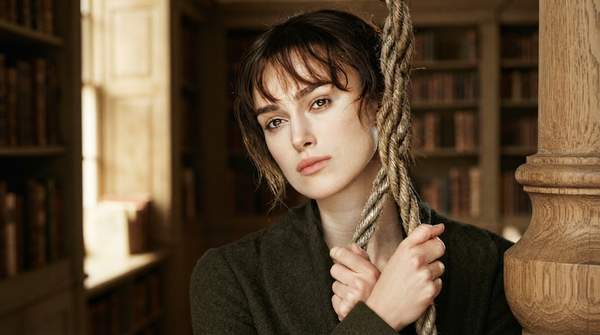
Adaptations in this era explored narrative, thematic, and stylistic shifts to resonate with diverse audiences. Examples such as Baz Luhrmann’s *Romeo and Juliet* (1996) and Joe Wright’s *Pride and Prejudice* (2005) illustrate how filmmakers began to bridge historical literature and contemporary dialogue. Luhrmann's *Romeo and Juliet*, for instance, retained the original Shakespearean dialogue but transplanted the setting to a modern, stylized Verona Beach, demonstrating a creative reinterpretation that sought to connect with a new generation while preserving the core narrative and themes.
Another example of this interpretive approach is Amy Heckerling's 1994 film *Clueless*, which adapted Jane Austen's *Emma*. While *Clueless* retained many of Austen's plot points and themes, it updated the characters' names and the entire setting to contemporary Beverly Hills. Both *Clueless* and the 1996 Miramax production of *Emma* starring Gwyneth Paltrow, which was a "straight" adaptation, are considered valid, albeit different, interpretations of Austen's work, according to Chapman University.
Contemporary Adaptations: Technology, Socio-Political Contexts, and Accessibility
In the contemporary era, particularly from the 2010s onwards, book-to-screen adaptations are heavily influenced by evolving media technologies and prevailing socio-political contexts. Digital technologies, including streaming platforms and immersive formats, have reshaped the accessibility and impact of literary works, as observed by *MIC Journal*. This technological evolution enables diverse reinterpretations and broadens the reach of adapted stories.
Modern adaptations often reflect current social struggles and political contexts, transforming narratives to articulate contemporary events and relations. For example, the 2023 series *The Handmaid’s Tale* examines how the adaptation resonates with the history of social struggles and the political contexts of its period, even though the original text was rooted in concerns from the 1980s. By emphasizing these themes, the adaptation becomes a pointed critique of modern-day issues, demonstrating how adaptations respond to and reflect cultural, social, and technological shifts.
This shift reflects a broader understanding of adaptation as a dynamic cultural process rather than mere replication. Contemporary filmmakers often reconcile the limitations of one medium with the affordances of another, leading to reinterpretations that diverge from strict textual fidelity to engage with current societal dialogues and leverage new distribution channels.
The Lasting Cultural Impact of Adaptation Philosophies
The evolution of book-to-screen adaptation philosophies has had a profound and lasting impact on both literary and popular culture. From the early commercial "exploitation" that introduced literary works to wider audiences through film, to the mid-century emphasis on fidelity that solidified the canon of "classic" adaptations, and finally to the modern embrace of reinterpretation driven by technology and socio-political relevance, each era has shaped how stories are consumed and understood.
Adaptations serve as cultural artifacts, bridging historical literature and contemporary dialogue. They not only introduce classic narratives to new generations but also provide platforms for re-examining timeless themes through a modern lens. The ongoing tension between preserving the essence of the original work and adapting it for new cultural landscapes ensures that book-to-screen adaptations remain a vibrant and evolving field, continually reflecting and influencing our collective cultural consciousness.
Sources
- The Art of Book-to-Movie Adaptations | UT Permian Basin Online — The University of Texas Permian Basin | UTPB
- Cultural History — WWW1
- Adapting History and Literature into Movies | American Studies Journal — American Studies Journal