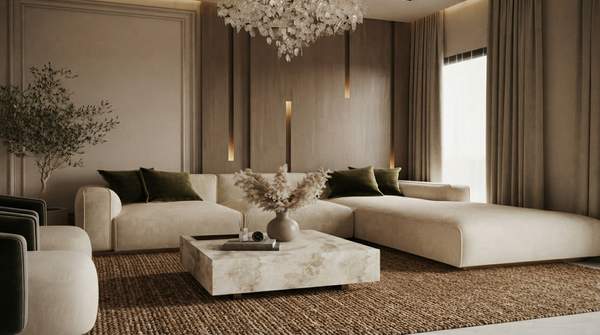
Your home's design is quietly working on your mind every day. The shape of a doorway, the height of a ceiling, and the view from a window all influence how you feel and think in a space—and often below the level of conscious awareness. Research in neuroarchitecture and environmental psychology shows that curved forms tend to evoke feelings of safety, high ceilings can stimulate a sense of freedom, and integrated natural elements measurably reduce stress. By understanding these connections, you can move beyond decorating by instinct and instead make deliberate design choices that cultivate calmness, focus, or creativity in each room. This article focuses on design elements rather than named styles like Craftsman or Art Deco, and it describes general psychological findings, not medical advice.
Spatial Geometry: Curves, Angles, and Emotional Response
The geometry of your rooms is one of the most direct emotional levers in residential design. Neuroarchitecture—the combination of neuroscience and architecture—examines how lighting, shapes, colors, and spatial arrangements affect cognitive functions, memory, and mood. A building biology newsletter by Rene Janssen summarizing this research reports that curved designs evoke feelings of safety and relaxation, whereas sharp angles can trigger anxiety, citing a 2013 study by Vartanian and colleagues.
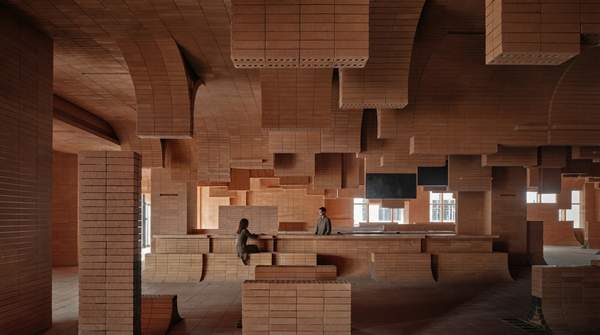
For you as a homeowner, that means geometry is more than an aesthetic decision. Curved archways, rounded wall corners, and oval motifs can serve as emotional cues that soften how a space feels, while a room dominated by hard angles may feel more alert, formal, or tense. Writing on how architecture shapes emotion, the London firm Studio Indigo makes a similar point: shapes are "emotional tools, carefully employed to influence how a space feels," and their continuous, unfolding quality suits creative environments and passageways where flow is part of the experience. A curved console in an entryway or an arched passage to a reading nook are small structural moves with real psychological weight.
Spatial Volume: How Ceiling Height and Openness Affect Cognition
How much room a space gives you, vertically and horizontally, shapes your mental state as much as its shapes do. Writing on the psychology behind spaces, architect Jorge Camprecios notes that spacious, well-lit areas often convey a sense of freedom and openness, while low ceilings and narrow corridors can induce claustrophobia or anxiety.
The practical implication is that volume should be matched to purpose. A high, open living area suits activities where you want expansiveness and creative thought—socializing, brainstorming, playing. Lower ceilings and more enclosed proportions, by contrast, can foster intimacy and focus, which is why a snug study or window seat often feels like the natural place to concentrate. The specific effect depends on context and individual perception: the same enclosure that reads as cozy to one person can read as confining to another. When renovating, you can work with volume through ceiling treatments, furniture scale, and sightlines even if you cannot change the structure itself.
Biophilic Design: Connecting Homes to Nature for Well-being
Of the three categories of elements, the connection to nature has some of the most consistent documented effects. Biophilic design integrates natural elements into architectural spaces to foster psychological and physiological well-being. Janssen's overview traces the concept to Edward O. Wilson's 1984 book Biophilia and cites research (Kellert and colleagues, 2008) showing that incorporating greenery, water features, and natural materials reduces stress, enhances cognitive function, and improves mood.
The residential effects are concrete. In homes, biophilic design has been shown to reduce mental fatigue and anger outbursts while improving attention spans and reliability. Research on children with attention deficits found significant improvements in focus when they were exposed to natural environments, and one study of teenage girls found nearby vegetation linked to increased self-discipline. Design writers echo this: bringing indoor plants, natural materials, and views of greenery into a home creates spaces that feel more welcoming and nurturing while reducing feelings of anxiety and depression. A 2008 study of the English population even found the health effects of socioeconomic inequality were far less pronounced in greener areas—one theory being that the visual complexity of natural environments acts as a kind of mental balm.
The Influence of Light and Color on Mood
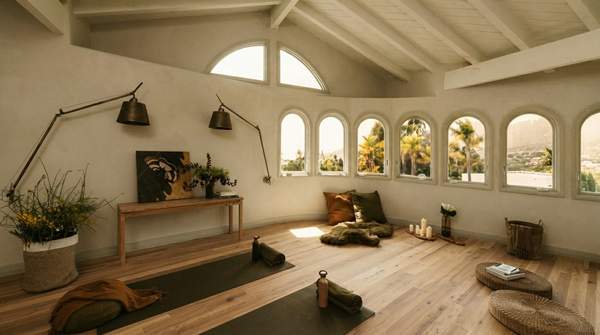
Light is arguably the element you will notice most, and the evidence on it is straightforward. A Pine Creek Homes article by Josh Veenstra reports that exposure to natural light can boost mood and enhance productivity, and that well-lit spaces feel more welcoming and less confining, positively influencing mental health. In contrast, dimly lit environments can contribute to feelings of sadness and sluggishness. Camprecios adds that a space well-lit by natural light can make occupants feel more optimistic and energetic, while a lack of light can lead to feelings of depression or fatigue.
Color works alongside light as an emotional language. Warm tones like red and orange can stimulate energy and creativity, while cooler colors like blue and green tend to be calming and relaxing—and designers often choose palettes strategically to influence mood and reflect a room's function. Texture matters too: warm natural materials like wood or rough stone can create a cozy, relaxing atmosphere, while smooth, cold surfaces such as marble convey formality. Together, these surface-level choices are the easiest and cheapest layer of the framework to adjust.
Designing Your Desired Mood: A Practical Framework
The table below maps specific architectural elements to their documented psychological effects, so you can choose features that intentionally cultivate the atmosphere you want—selecting curved archways to promote relaxation, for example, or ensuring green views to support focus.
| Architectural Element | Psychological Impact (Mood/Cognition) | Design Application Example | Qualification |
|---|---|---|---|
| Curved designs | Evoke feelings of safety, comfort, and relaxation | Curved archways, rounded corners, oval motifs | General finding; individual and cultural variations may occur |
| High ceilings | Convey freedom and openness; can stimulate creativity | Tall, open living areas for socializing and creative work | General finding; individual and cultural variations may occur |
| Low ceilings / narrow corridors | Can induce intimacy and focus, or claustrophobia and anxiety | Enclosed study nook or snug reading corner | Specific effect depends on context and individual perception |
| Natural light | Boosts mood and productivity; reduces confinement | Maximizing windows and daylight in main living spaces | Well-lit spaces feel more welcoming; dim environments can contribute to sadness |
| Biophilic design (nature integration) | Reduces stress and mental fatigue; improves cognitive function, mood, and social interaction | Indoor plants, natural materials, green views, water features | Rooted in an inherent human connection to nature, supporting psychological and physiological well-being |
| Warm colors (red, orange) | Stimulate energy and creativity | Accent walls in active or creative rooms | Palettes are often chosen strategically to reflect a space's function |
| Cooler colors (blue, green) | Tend to be calming and relaxing | Bedroom and bathroom palettes | Palettes are often chosen strategically to reflect a space's function |
One finding from neuroscience research deserves emphasis as you use this framework: your own self-report may not capture the full effect. In one study, rooms changed participants' autonomic responses—their patterns of breathing, heart activity, and sweating—and the communication between brain regions involved in seeing and attention, yet participants reported no change in their emotions across conditions. This suggests architectural influence often operates beneath conscious perception, and social-science commentary on the finding argues for capturing effects people may not consciously perceive, rather than only asking them how they feel.
Making Intentional Design Choices for a Better Home
The takeaway is that homeowners can intentionally select architectural elements to foster specific moods and cognitive states, moving beyond unconscious reactions to their built environment. You do not need a high-end renovation to apply this: a curved mirror, a daylight-optimized desk position, a row of plants, and a cooler bedroom palette are all accessible moves.
How will you know it is working? The measure is your own observable shift in emotional state or cognitive function—increased calmness, focus, or creativity—when interacting with a space designed with these principles. One simple way to start, suggested in the design-psychology literature, is to pause the next time you enter a room and notice which elements are influencing how you feel. Keep in mind that these are general findings that may vary by individual and cultural context, and they are design principles—not a treatment for mental health conditions.
Sources
- Designing for the Mind: How Architecture Impacts Mental Health — Buildingbiology
- How Architecture Shapes Emotion and Mood in Your Home - Studio Indigo | Luxury Interior Designers & Architects — Studio Indigo | Luxury Interior Designers & Architects | London
- How Architectural Design Shapes Our Emotions: The Psychology Behind Spaces - JC Architect
- Space and Mind: The Psychological Impact of Architectural Design - Pine Creek Homes — Pinecreek
- The hidden ways that architecture affects how you feel | School of Psychology — Uwaterloo
- How Does Architecture Affect Our Emotions? – Social Science Space — Socialsciencespace
- Building Better Moods: How Architecture Can Impact Your Emotions — Jpr1source