Bangkok Dusit Medical Services (BDMS) has unveiled WellEra, a THB 29 billion wellness complex on the corner of Sarasin and Langsuan Roads opposite Lumpini Park, anchored by Capella Residences Bangkok — Thailand's first Capella-branded residences. The project, co-developed with Capella Hotel Group, is scheduled to open fully in 2030 and is built around a single marketing proposition the developer calls "Healthspan as a New Return on Investment."
The residential centerpiece is a 45-storey tower designed by KPF of New York, holding 262 units according to Capella Hotel Group's June 2026 announcement, though some reports cite 259. Pre-sale pricing listed by a Thai property listing site starts at THB 30 million, with a THB 1 million booking fee.
Deconstructing 'Healthspan as a New Return on Investment'
The concept at the heart of WellEra is straightforward, if ambitious: BDMS argues that the value of a property should be measured not only in square meters and appreciation, but in the years of healthy life it gives its owner. The developer frames the gap between average lifespan and healthspan — the years lived in good health — as a problem that the built environment can help close.
"WellEra represents an investment of more than 29 billion baht in a new model of integrated wellness living — where health, medicine, science, technology and lifestyle come together under one vision: that good health is not an aspiration, but a way of life," said Dr. Poramaporn Prasarttong-Osoth, Chairperson of the Executive Committee and President of BDMS, in the project's announcement.
The medical rationale comes from BDMS Wellness Group. "Scientific evidence shows that our health is shaped not only by genetics or medicine, but also by the environments we experience every day," said Dr. Tanupol Virunhagarun, Chief Executive Officer of BDMS Wellness Group. The result, the developer claims, is a home that becomes part of preventive healthcare itself.
A caveat is essential here. "Healthspan ROI" is BDMS's own marketing proposition, drawn on its more than 50 years of healthcare and preventive medicine expertise. It is a framing device for a real estate launch, not a validated medical or financial claim — and this article explains the concept without endorsing it.
The Four Pillars of the WellEra Ecosystem
WellEra gathers four interconnected components on one site, designed to work as a continuous ecosystem supporting prevention, recovery and long-term wellbeing. A planned pedestrian bridge and Wellness Garden would link the complex to Lumpini Park through Gate 7, extending the ecosystem into the city's most famous green space.
The design targets WELL Platinum, LEED Gold and Fitwel 3-Star certification, an unusually aggressive stack of wellness and sustainability standards for a Bangkok development. The Urban Wellness Retreat is planned as a 168-room property, though its operator has not been named, and no retail tenants for the Lifestyle Arcade have been announced.
The WellEra Ecosystem: Deconstructing Healthspan ROI
To see how the marketing concept translates into concrete offerings, each pillar can be mapped against its announced role in the claimed healthspan benefit. The framework below breaks the concept into its four constituent parts and shows what each is designed to contribute.
| Component | Contribution to Healthspan ROI | Key Features/Services |
|---|---|---|
| Capella Residences Bangkok | Wellness-integrated daily living; the residential anchor of the ecosystem | 45-storey KPF-designed tower, 259–262 units, in-residence wellness systems, Wellness Concierge, Vitality Checkpoint |
| BDMS Wellness Clinic | Preventive medicine and personalized healthcare, drawing on BDMS's 50+ years of expertise | Preventive care focus; personalized health protocols; integration with resident life described so far in general terms |
| Urban Wellness Retreat | Recovery and restorative stays within the same ecosystem | 168-room retreat; operator not yet announced |
| Lifestyle Retail | Supports a holistic wellness lifestyle in a mixed-use environment | Lifestyle retail arcade; tenants not yet announced |
Read together, the pillars form the developer's argument in physical form: the clinic handles prevention, the residences embed health into daily life, the retreat covers recovery, and retail sustains the lifestyle between them. Whether the parts genuinely interlock will only be testable once the complex opens.
Capella Residences Bangkok: Integrated Wellness Living
The residences carry the most concrete detail. Capella Hotel Group's announcement describes Capella Residences Bangkok as its first wellness-integrated branded residence, separate from the Capella Bangkok hotel on the Chao Phraya River — a property its president, Roland Fasel, notes was named the world's best hotel in 2024.
Residents will have access to a full suite of wellness-oriented services: a Wellness Concierge, personalized health protocols, and a Vitality Checkpoint with daily biometric monitoring. Emergency support includes ambulance services and emergency medical air transfer via helicopter — a striking feature for a residential tower, and one that leverages BDMS's position as one of Thailand's largest hospital networks.
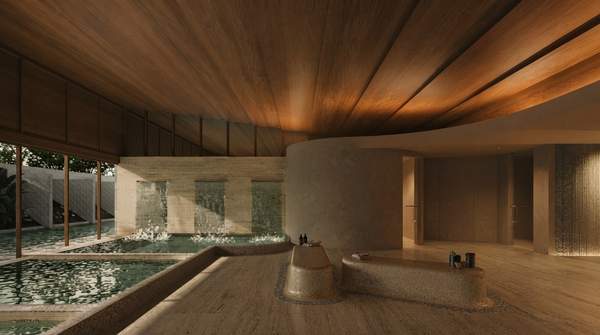
On-site amenities center on longevity and recovery: a 24-hour residents' lounge, dedicated wellness and recreation floors, an infinity pool, plunge pool, spa suite, and mindfulness studios. The location places Lumpini Park at the doorstep, with BTS Ratchadamri roughly 800 meters away and King Chulalongkorn Memorial Hospital 1.5 kilometers distant.
What "personalized health protocols" and "biometric monitoring" actually entail — the tests involved, the data collected, how the clinic uses it — remains defined only in general terms in the initial announcements. That gap between promise and specification is the project's central open question.
Implications for Luxury Wellness Living
Prospective residents and wellness tourism stakeholders should evaluate WellEra's integrated health services and residential amenities as a new benchmark for long-term well-being investment — one that formally fuses a major healthcare provider with a luxury hospitality brand, and could shape how future high-end Bangkok developments are marketed.
The measurable test is already on the calendar: the full opening of the WellEra complex in 2030, followed by resident feedback on the efficacy of its integrated wellness programs. Until then, the named retail tenants, the Urban Wellness Retreat operator, and the specifics of the health protocols are the details worth watching for. The concept is bold. The evidence arrives in 2030.
Sources
- WellEra Unveils THB 29 Billion Wellness Complex With Capella Residence in Bangkok — THE STANDARD GLOBAL
- BDMS Showcases 29-Billion-Baht Wellness Complex 'WellEra' at Capella Residences Bangkok Project - KAOHOON INTERNATIONAL
- Capella Residences Bangkok at WellEra — Primecollectionth
- Capella Residences Bangkok: Exclusive Wellness and Hospitality Focused Living — BRESI. Branded Residences
- Capellahotels
- BDMS Launches WellEra Bangkok, a US$865 Million Wellness Complex With Capella Hotel… — Fitt Insider