Natural materials calm a room through the body, not just the eye. According to MIKOL, a design publication that reviewed the research on natural materials and mental health, the sensory signature of wood, stone and natural fibers — their warmth, texture and visual grain — engages the nervous system in ways that synthetic look-alikes do not. The reason is evolutionary: the sensory inputs of natural environments became durably associated with safety and recovery long before built environments existed. This article explains how those mechanisms work, material by material, and where the boundary between genuine and imitation materials actually falls.
Wood: Visual Complexity and Thermal Comfort
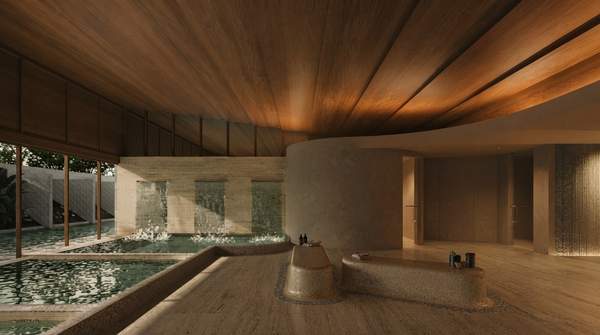
Wood works on two channels at once: what you see and what you feel. Its grain and knots carry a visual complexity that MIKOL's research review describes as deeply familiar to the human nervous system — the kind of irregular, organic patterning that characterized the environments where our ancestors rested and recovered. The nervous system, in that account, never updated its associative library when we moved indoors; it still reads natural grain as a signal of safety and the possibility of recovery.
Thermal behavior matters just as much as appearance. Wood absorbs and releases heat slowly, which stabilizes the temperature of a room and of the surfaces your hand touches. That stability is not a comfort footnote: consistent, moderate warmth is part of what the body registers as a safe resting condition. A wood surface that stays pleasantly warm underfoot or under the palm reinforces, moment by moment, the same message the grain delivers visually.
The practical takeaway is that wood's calming effect is cumulative and multi-sensory. It is not the color of the oak that soothes; it is the pairing of complex, irregular pattern with stable, comfortable warmth — two inputs the body processes as congruent evidence of a natural, non-threatening environment.
Stone: Grounding Through Thermal Mass and Tactile Feedback
Natural stone contributes the opposite thermal character, and that is precisely its value. Stone absorbs heat and releases it slowly, maintaining a stable temperature that keeps a room within a comfortable range. MIKOL's review highlights this thermal mass as a core reason stone interiors feel settled: the material buffers swings that would otherwise register as minor stressors.
Touch completes the picture. A stone surface is cool, smooth or subtly rough, and that varied tactile input gives the hand something real to read. The research review frames this kind of sensory feedback as grounding — a direct, physical anchor to the present environment. Running a hand across honed marble or rough slate is not the same experience as touching a printed porcelain tile, and the difference is registered below the level of conscious thought.
Stone also carries the same visual logic as wood. Natural veining has a fractal structure — an organized irregularity that the eye processes as organic. MIKOL notes that stone-effect surfaces, which print a simplified approximation of the pattern, do not replicate that fractal structure and therefore do not produce the equivalent physiological response. The pattern is not decoration; it is the input.
Natural Textiles: Softness, Security, and Somatosensory Comfort
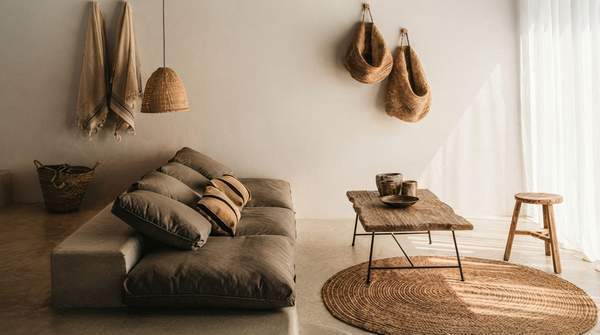
Linen, wool and cotton act primarily through the somatosensory system — the sensory system responsible for processing touch, temperature and texture. MIKOL's review centers the research on natural textiles there: soft natural fibers engage the body's touch-processing machinery in a way that promotes comfort and reduces physiological stress markers.
Madison Home, writing on the psychology of texture, makes the same point from the designer's chair. In its framing, tactile sensations "literally mirror the feeling of comfort and safety," with soft textures like wool and cotton associated with comfort and serenity, and rough or organic textures like linen and natural wood associated with authenticity, earthiness and warmth. Layering multiple textures, it argues, keeps the senses subtly engaged throughout the home — a deliberate counterweight to an overstimulating world of screens and digital noise.
The mechanism is the most direct of the three materials: textiles touch skin. Where wood and stone work through ambient conditions and occasional contact, bedding, upholstery and curtains are in continuous somatosensory conversation with the body. That is why a linen sheet or a wool throw does quiet, persistent work that a polyester imitation of the same color cannot replicate.
Psychological Impact of Natural Materials in Home Design
The table below maps each material's physical properties to the sensory channel that carries them and the psychological outcome the research associates with them. Use it to work backward from the effect you want — calm, grounding, comfort — to the material property that produces it.
| Material | Key Property | Sensory Input | Psychological Outcome |
|---|---|---|---|
| Wood | Slow heat absorption and release; organic grain | Thermal and visual | Stable, comfortable temperature; visual complexity the nervous system associates with safety and recovery |
| Natural stone | Thermal mass; cool, smooth or subtly rough surface; natural veining | Thermal, tactile and visual | Thermal comfort; grounding, calming tactile feedback; fractal visual input |
| Natural textiles (wool, linen, cotton) | Soft natural fibers | Tactile (somatosensory) | Reduced physiological stress markers; feelings of comfort and security |
| Synthetic imitations | Printed approximation of natural pattern; different thermal, tactile and acoustic properties | Visual only | Mismatch between visual and other sensory input; diminished or absent calming response |
Read the last row carefully: it is the decision boundary of the whole model. A material that delivers its benefit through one sensory channel while contradicting it on three others produces a different result than a material whose channels agree.
Beyond Aesthetics: Why Authentic Materials Matter
The most consequential finding in the research MIKOL reviewed is blunt: the documented benefits are specific to genuine natural materials, not to visual approximations of them. As the review puts it, "the material that is what it appears to be produces the documented benefits. The material that looks like something it is not does not."
The reason is multi-sensory congruence. A wood-look vinyl plank may photograph like oak, but it does not behave like oak. It conducts heat differently, feels different under the hand, and sounds different underfoot. When the eyes report "natural" and the skin reports "plastic," the nervous system registers the contradiction. MIKOL describes this mismatch between visual and other sensory input as a source of cognitive dissonance or unease — the opposite of the coherent environmental signal that produces calm.
Fractal structure is the second failure point of imitations. Natural grain and veining are organized irregularities; printed patterns are simplified approximations of them. The eye does not consciously flag the difference, but the physiological response differs, and the imitation does not produce the equivalent effect. This is why a stone-effect surface can look right in a photograph yet leave a room feeling flat in person.
The practical rule for any renovation or purchase: judge materials with your eyes closed. Touch the surface, note its temperature, notice how it sounds. If the non-visual channels contradict the visual one, the psychological benefit is being lost — and, per the research, potentially reversed.
Designing for Deeper Well-being: Choosing Authentic Natural Materials
The decision is to prioritize genuine natural materials over synthetic imitations in home design to achieve measurable psychological benefits like stress reduction and enhanced calm. That does not mean replacing everything at once; it means letting authenticity govern the choices that touch you most — the floor underfoot, the countertop underhand, the fabric against skin.
The measurable indicator is stated plainly: observe a noticeable difference in feelings of calm, comfort and connection to nature within spaces incorporating authentic natural materials compared to those with synthetic alternatives. Test it in your own home. Replace one synthetic surface with a genuine one — a linen throw for a polyester one, a stone tray for a resin one — and notice whether the room, and your body in it, feels different. The research suggests it will.