Sharing a bedroom does not always mean sharing the same bedtime routine.
One person may enjoy listening to music before sleep, while the other prefers a quiet room. One may like an audiobook, meditation recording or nature sounds, while the other is ready to turn off the lights. Finding a compromise can take some experimentation. Pillowsonic Symphony offers an under-pillow speaker designed for people who want bedtime audio without wearing earbuds or headphones.
The goal is not to make every couple follow the same routine. It is to find a practical way for each person to feel comfortable while respecting the other person's needs. Personal audio equipment may help, but the right solution depends on the room, the content and both partners' preferences.
Understand the Difference in Bedtime Preferences
Different sleep schedules and wind-down habits are common. A person who works late may want a little quiet time with a podcast, while their partner may prefer to sleep earlier. Someone who enjoys guided relaxation may find silence less appealing, while another person may find any sound distracting.
Start by talking about what each person needs. Is the issue the volume, the type of content, the timing or the presence of a wearable device? Once you identify the problem, it becomes easier to compare options. A simple adjustment to timing or volume may be enough; in other cases, a different listening device could be worth considering.
Compare Common Listening Options
A conventional bedside speaker is straightforward, but its sound spreads through the room. Even low-volume audio can be noticeable to a light sleeper, depending on the room and the recording. Earbuds deliver sound directly to the listener, though some people find them uncomfortable when lying on a pillow. Sleep headphones may provide a softer wearable alternative, but fit and comfort differ from person to person.
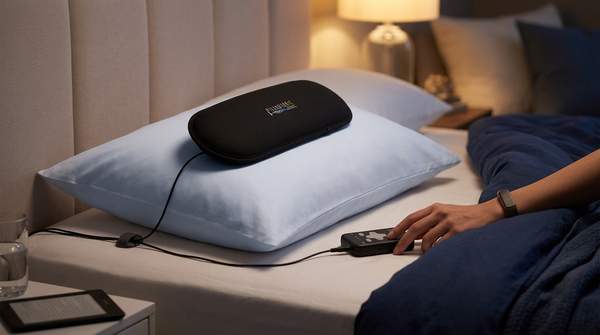
An under-pillow speaker offers another option. It is designed to sit beneath the pillow, placing the sound source close to the listener without requiring anything to be inserted into the ears. This may appeal to someone who wants to listen while lying down but would rather not wear earbuds. It is important to remember that the sound may still be audible to a partner, so this is not a guarantee of complete silence for everyone else.
What Pillowsonic Symphony Offers
Pillowsonic Symphony's listed FM-15 model combines a slim speaker with a Bluetooth V5 controller and built-in amplifier. The product listing describes a speaker measuring 13 by 4 by seven-eighths of an inch, along with a 1GB SD memory card preloaded with nature sounds and relaxation music. The card can be expanded up to 8GB and supports approximately 100 tracks, according to the listing.
The model also includes an AUX input, analog volume control, a headphone port and a sleep timer with automatic shutoff. The listed continuous playback time is up to six hours. These details may be useful to a listener who wants flexibility in audio choice and a way to stop playback after a set period. Confirm current specifications, accessories and operating instructions before purchasing.
Agree on a Comfortable Volume
Volume is often the most important consideration when two people share a room. Start with a low setting and ask your partner whether the audio is noticeable. Adjust the placement and volume as needed, and test different types of content. Spoken-word recordings may be more noticeable than steady ambient sounds, while bass-heavy music may travel differently from softer audio.
Do not assume that a speaker beneath a pillow will be inaudible outside it. The result depends on the pillow, mattress, speaker placement, volume and room acoustics. If your partner is sensitive to sound, consider listening earlier in the evening or choosing a shorter session. Mutual agreement matters more than trying to find a device that promises to solve every difference.
Choose Content That Fits Your Routine
A listener who wants to unwind may enjoy nature sounds, instrumental music or guided meditation. Someone else may prefer an audiobook or a familiar podcast. Pillowsonic Symphony's included nature sounds and relaxation music can provide a starting point for listeners who want to try calming audio. Its connection options may also suit people who prefer using a compatible external audio source.
Each partner should be able to keep their routine comfortable. One person might listen for fifteen minutes before sleep, while the other reads or prepares for bed. If the audio keeps the listener alert, try a less engaging recording or stop playback earlier. There is no need to use audio every night if silence feels better.
Make Controls and Placement Practical
A device is more likely to become part of a routine if it is easy to use. Check that volume controls are accessible, that the speaker can be positioned comfortably and that any cable stays out of the way. Follow the manufacturer's placement and safety guidance. Try the setup before bedtime so you can make adjustments without disturbing a partner who is already asleep.
Pillowsonic Symphony's listed model includes analog volume control and a sleep timer. The timer can be useful when a listener wants playback to stop automatically rather than continue indefinitely. The product listing states up to six hours of continuous playback, but actual performance may vary. Check the current instructions for operating and power details.
Consider Travel and Changing Schedules
Different schedules can become more noticeable when travelling, staying with family or sharing unfamiliar accommodation. A portable listening setup may help maintain a familiar routine without relying on a room speaker. The Pillowsonic Symphony listing includes a satin travel pouch, which can help keep the device and its accessories together.
Before travelling, check what you need to pack, including cables and any audio sources you plan to use. If you intend to listen without an internet connection, confirm that your preferred recordings are available locally and compatible with the device. A little preparation can make the setup easier to use away from home.
Evaluate Cost and Product Details
Before purchasing, compare the features with your actual needs. Consider dimensions, pillow compatibility, connection types, playback controls, included accessories, warranty and price. If the main goal is to avoid earbuds, focus on comfort and placement. If you mainly want audio that stops automatically, pay attention to the timer. If you share a bedroom, be realistic about sound transmission and discuss expectations with your partner.
The indexed Pillowsonic Symphony product page shows a price of $69.99, with a regular price of $79.99, and lists a one-year guarantee. Prices and terms can change, so verify current details directly before placing an order.
Find a Compromise That Works for Both People
No single device can resolve every difference in sleeping habits, but thoughtful choices can make a shared bedroom more comfortable. Talk about volume and timing, try a few listening options and adjust the routine if one person is being disturbed. If sound remains a problem, consider listening earlier or using a different solution that better suits both partners.
For someone who wants bedtime audio without wearing earbuds, Pillowsonic Symphony offers a purpose-built under-pillow speaker with practical playback features. Reviewing its specifications and trying a considerate, low-volume setup can help couples decide whether it fits their routines. The best outcome is not simply being able to play audio; it is finding an approach that respects both people's comfort and preferences.