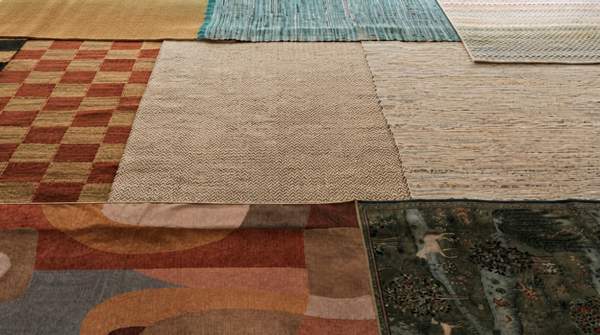
The short answer for most homes: wool and polypropylene are the two materials that reliably stand up to high-traffic living rooms and hallways, while silk and jute belong in dry, low-traffic spaces where their beauty can be admired rather than stress-tested. Cotton sits in the middle—easy to clean, but quicker to wear. The real decision is not which material is "best" in the abstract; it is which trade-off between durability, stain resistance, moisture tolerance and feel suits the specific room you are furnishing.
Jaipur Rugs' material guide rates wool's durability as excellent and polypropylene's as good, while silk scores low on both durability and stain resistance. Those ratings, combined with care guidance from flooring and design specialists, form the basis of the comparison below. This guide covers five common materials—wool, silk, jute, cotton and polypropylene—and does not address blends or less common fibers like sisal and seagrass in depth.
Wool: The Durable and Luxurious Choice
Wool is one of the most durable natural fibers, which is why Roger + Chris, a furniture maker that publishes material-maintenance guidance, calls it an excellent choice for high-traffic areas that can withstand heavy use while maintaining its appearance. It is also soft and plush underfoot, and it offers natural insulation that helps regulate room temperature and reduce noise. Jaipur Rugs places wool's best use in living rooms and bedrooms, with good stain resistance and moderate moisture tolerance.
That moderate moisture rating matters more than many buyers realize. Wool in bathrooms or basements carries mildew risk if moisture is not managed carefully, according to Kevin O'Gara's homeowner guide at Kevin Francis Design. Care is correspondingly attentive: blot spills immediately, avoid harsh detergents, and schedule professional cleaning every 18–24 months. Sisal Rugs Direct adds that spills can be spot cleaned, but bigger stains may require professional cleaning to avoid permanent damage. One firm rule from O'Gara: always blot, never scrub, since scrubbing breaks the fiber crimp and accelerates wear.
Silk: Elegance for Low-Traffic Spaces
Silk is the material to choose when the rug is a focal point rather than a workhorse. Jaipur Rugs rates silk's durability low, its stain resistance low and its moisture tolerance low, while assigning it to formal, low-traffic spaces. Its fade resistance, by contrast, is rated good—so a silk rug kept out of harm's way can hold its color beautifully over time.
The practical implication is straightforward: silk suits rooms where spills are rare and foot traffic is minimal, such as a formal sitting room. Marshall Flooring's material overview notes that wool and silk rugs are luxurious and durable but often more expensive, so a silk purchase is as much an aesthetic investment as a functional one. Keep it in dry environments, and treat any cleaning beyond gentle handling as a professional matter.
Jute: Natural Texture for Dry Interiors
Jute brings an organic, textured look that suits coastal and modern farmhouse aesthetics, as Lewis and Sheron Textiles describe in their living-room rug guide—though they caution that it can feel a bit coarse. Maison Blonde's material guide, written by Alyssa Harmsma, draws a useful distinction within plant fibers: sisal is stiffer and coarser, ideal for entrances and hallway runners, while jute feels softer underfoot, making it better suited to main living spaces.
Functionally, Jaipur Rugs rates jute's durability as moderate, stain resistance as moderate, and moisture tolerance as low—its best use is dry indoor spaces. Harmsma notes that jute and sisal are all-natural, environmentally friendly cellulose fibers that are pet friendly, withstand scratches, and are relatively cleanable. The moisture limitation is the key placement constraint: jute should stay away from damp zones and heavy spill exposure.
Cotton: Practicality and Easy Care
Cotton is the pragmatist's material. Jaipur Rugs rates its durability and stain resistance as moderate, its fade resistance as low, and its moisture tolerance as low, assigning it to washable zones and bedrooms. Roger + Chris note that cotton rugs are easy to clean, though they may wear out more quickly than other materials, especially in high-traffic areas; regular washing and vacuuming are recommended.
The takeaway for placement is that cotton works best where easy cleaning is the priority and foot traffic is modest—a bedroom, a casual washable zone, a child's room where the rug can be laundered rather than professionally serviced. In a busy hallway or main living room, its faster wear becomes a real cost over time. Cotton is a reasonable choice for rooms where you would rather replace the rug in a few years than maintain a more demanding fiber.
Polypropylene: The Versatile Synthetic
Polypropylene is the most forgiving of the five materials. Jaipur Rugs rates its durability as good, stain resistance as excellent, fade resistance as excellent and moisture tolerance as excellent, with best use in outdoor and high-traffic utility spaces. Sisal Rugs Direct describes polypropylene rugs as the most durable and easiest-to-clean option for both indoor and outdoor spaces, noting they are mold and mildew resistant, so you need not worry about drying them quickly. Edward Martin's care guidance adds that they can even be hosed off for outdoor use.
There is one significant caveat. O'Gara's guide notes that polypropylene repels water completely but can trap oily stains that are nearly impossible to remove. Maintenance is otherwise light: synthetics tolerate steam cleaning and stronger solutions, with cleaning recommended every 12–18 months. Lany Space's comparison describes polypropylene's feel as firmer and less soft than wool, with a simple matte look—a fair summary of the aesthetic trade-off for its practicality.
Area Rug Material Comparison at a Glance
The table below synthesizes the ratings and care guidance above into a single reference. Read it against your room's traffic level, spill risk and humidity: the material whose strengths match your conditions—and whose weaknesses you can live with—is the right choice. Materials whose weak column matches your room's condition are the ones to avoid.
| Material | Durability | Stain Resistance | Moisture Tolerance | Feel | Ideal Use Case |
|---|---|---|---|---|---|
| Wool | Excellent; handles heavy use | Good; blot spills immediately, avoid harsh detergents | Moderate; mildew risk in damp rooms | Soft, plush, naturally textured and warm | Living rooms, bedrooms, high-traffic areas with attentive care |
| Silk | Low | Low; handle carefully | Low; keep dry | Luxurious; often expensive | Formal, low-traffic spaces |
| Jute | Moderate | Moderate | Low | Natural texture; can feel coarse, softer than sisal | Dry indoor spaces; main living areas |
| Cotton | Moderate; wears faster in busy areas | Moderate | Low | Casual and easygoing | Washable zones, bedrooms |
| Polypropylene | Good; very wear-resistant | Excellent, but traps oily stains | Excellent; mold and mildew resistant | Firmer and less soft than wool | Outdoors, high-traffic utility spaces |
Matching Rug Materials to Your Home's Needs
For high-traffic living rooms and hallways, the choice narrows to wool or polypropylene. Chinburg Properties' rug guide notes that the living room is one of the busiest rooms in the home, so durability should be the priority. Wool rewards that traffic with comfort and natural insulation if you commit to blotting spills and professional cleaning every 18–24 months; polypropylene rewards it with near-effortless upkeep, at the cost of a firmer feel and vulnerability to oily stains.
For low-traffic bedrooms, offices and formal rooms, silk and cotton earn their place. Silk delivers the most luxurious presence but demands a dry, gentle environment; cotton delivers easy, washable practicality with the understanding that it will wear faster. Jute fits main living spaces where its natural texture can be appreciated—provided the room stays dry, since its moisture tolerance is rated low.
For moisture-prone or outdoor areas, polypropylene is the clear pick: it is the only one of the five rated excellent for moisture, and it can be hosed off. Wool is the material to keep out of bathrooms and basements due to mildew risk, and jute, cotton and silk all share low moisture tolerance, ruling them out of damp zones.
Choosing Your Ideal Rug: A Practical Decision
Select an area rug material by prioritizing either durability and ease of maintenance for high-traffic or moisture-prone areas, or aesthetic appeal and luxurious feel for low-traffic, dry spaces. The two poles are wool and polypropylene on the practical side, silk and jute on the aesthetic side, with cotton as the washable middle path.
The measurable indicator of a good choice is simple: the chosen rug material effectively withstands daily use and maintains its appearance in its designated room, requiring maintenance aligned with expectations. If your wool rug in the hallway needs professional cleaning sooner than every 18 months, or your polypropylene rug has picked up an oily stain that will not release, the material was mismatched to the room. Cleaning advice here is general—always consult the manufacturer's care instructions for your specific rug before acting.
Sources
- What Rug Material Lasts Longest? A Complete Guide — Jaipur Rugs
- Area Rug Materials: Durability and Maintenance | Blog | Roger + Chris
- Why Wool Outperforms Synthetic Rugs: A Homeowner's Guide — Kevin Francis Design
- Polypropylene vs Wool Rugs: Which One Is Right for Your Home — Sisal Rugs Direct
- Marshallflooring
- Finding the Best Area Rugs for Your Living Room — Lewis and Sheron Textiles
- Complete Rug Material Guide — Maison Blonde
- Edwardmartin
- Wool vs Polyester vs Polypropylene Rug: Which Material Is Best? — Lany Space
- How to Choose the Best Area Rugs for Your Home — Chinburg Properties