There is no single "best" reading light—there is only the best light for your chair, your bedside table, and your suitcase. Before you comparison-shop specific models, you first have to pick a category: a clip-on book light, a neck light, a wall sconce, a task lamp, or a floor-style reading lamp. Each form factor trades off portability, footprint, and light quality in a different way, and the right choice depends almost entirely on where you actually read.
This guide compares those categories against consistent criteria—primary use environment, portability, directionality, and lighting quality—so you can narrow your search before you ever read a product review. One note on scope: these recommendations are for reading physical books; reading on electronic screens may have different requirements. And this is a comparison of categories, not brands or models.
Understanding Essential Reading Light Specifications
Two numbers dominate any reading light discussion: lumens and correlated color temperature (CCT). Lumens quantify visible light output, which makes them the key metric for brightness—unlike wattage, which only measures energy consumption. For reading, lighting experts at Edward Martin recommend 450–800 lumens in localized task lighting to keep text legible without strain. The reasoning is physiological: overly dim environments force the eyes to dilate, leading to fatigue, while excessively bright light can cause discomfort and even photophobia.
Color temperature, measured in kelvins, describes how warm or cool the light appears—and it should depend on the moment and the material you're reading, as Flexfire LEDs explains. A warmer shade around 3500K suits cozy, wind-down reading, while a cooler 5000K light supports deep focus. The same source frames the brightness question vividly: "If the light is too dim, you'll squint and lean in; too bright, and you'll feel overwhelmed and might develop a headache. The right brightness lets your eyes relax and focus naturally."
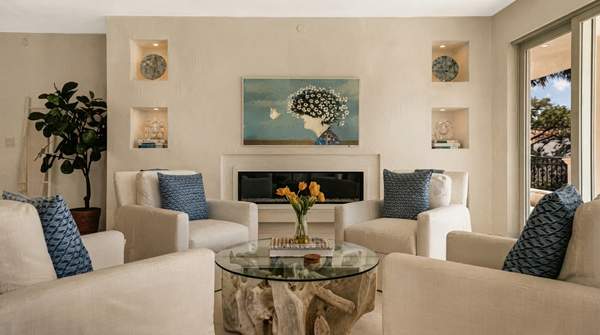
One more principle worth carrying into any purchase: layering ambient, task, and accent lighting keeps a room balanced and avoids high-contrast zones that force your eyes to constantly adjust. A reading light works best as the task layer within that structure, not as the room's only source of illumination.
Reading Light Comparison Guide
Use this table to match a category to your situation before shopping for specific products. Each row reflects the inherent design of the form factor, evaluated against the same criteria.
| Light Type | Best Use Case | Footprint & Portability | Light Directionality | Typical Brightness | Color Temperature |
|---|---|---|---|---|---|
| Clip-on book lights | Reading in bed or while traveling | Highly portable; attaches to the book or headboard | Direct, focused onto the page | 150–300 lumens recommended by MOD LIGHTING for clip-on lights | Warm tones suit bedtime reading |
| Neck lights | Hands-free reading in bed, on a plane, or outdoors | Worn on the body; maximally portable | Directed downward onto the page | Low output appropriate for personal use | Warm tones suit bedtime reading |
| Wall-mounted sconces | Bedside or living-room reading, especially without a table | Zero surface footprint; fixed in place | Adjustable, targeted, glare-free light | Within the 450–800 lumen task-lighting range | Dimmable warm white for relaxed reading |
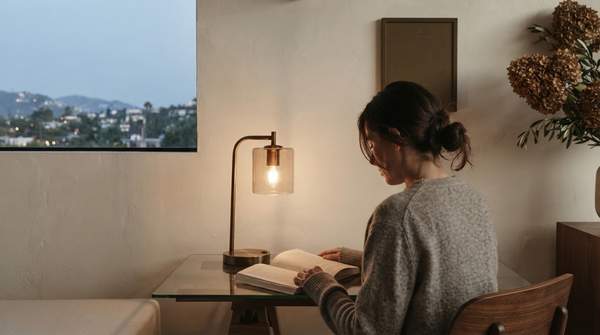
| Task/desk lamps | Focused reading and work at a desk or chair | Occupies surface space; not portable | Adjustable, directional task light | 450–800 lumens for reading | 3500K for cozy reads; 5000K for deep focus |
| Floor reading lamps | Reading in a favorite chair without a table | Larger footprint; stays in one spot | Overhead directional light onto the seat | Within the 450–800 lumen task range | Warm white for relaxation |
The pattern the table reveals: as portability decreases, footprint and integration with the room increase. A clip-on light travels with the book; a sconce disappears into the wall; a task lamp anchors a dedicated reading spot.