Public art that involves the public is not one practice but several, and the differences sit in who decides, who makes, and when the community enters the process. The evidence describes three distinguishable models: participatory planning and budgeting, where residents steer selection and funding; artist-led interventions, where temporary projects activate neighborhoods; and direct co-creation, where community members physically fabricate parts of the work. This article compares all three and traces the spectrum of community power that runs through them — from advisory input on finished ideas to hands-on authorship of the artwork itself.
Understanding Community-Engaged Public Art
Across municipal programs, artist accounts, and civic advocacy writing, participatory public art is framed less as a category of object than as a category of relationship. Writing on civic participation, the National Civic League describes public art as an area of public life — like other forms of public budgeting — where residents can be invited to direct neighborhood investments and improvements. The choice of engagement model determines what kind of participation is possible: whether residents comment, choose, convene, or construct. A format such as a community mural, a pop-up installation, or a participatory textile each opens a different door for the people who live around it.
Model 1: Participatory Planning and Budgeting
In this model, the community's leverage comes earlier than the artwork: residents shape what gets funded, which artists are selected, and where gaps in the public art collection exist. The National Civic League points to Chicago, where residents have had several opportunities to direct the investment of public art funding, and where the Rogers Park Business Alliance has highlighted local public art projects developed through participatory budgeting. Its suggested action items include gathering public input to identify "art deserts" and generate ideas for more equitable access, and considering alternative funding mechanisms such as mobile collection or loan programs for areas without major capital projects.
Participatory selection is the most established form of this model. Current public art programs most often include community participation in the selection process, and while formal arts expertise still matters, most public entities have opted for a balanced approach — pairing artistic skills and experience with local voices on site-specific selection committees. The community's role here is primarily advisory and decision-making at a programmatic level; the physical fabrication remains in professional hands.
Model 2: Artist-Led Interventions
The second model keeps the artist in the lead but reimagines engagement itself. New York City's Department of Cultural Affairs frames its Public Art as Community Engagement (PACE) pilot around artist-led temporary art, convenings, and interventions as tools for deliberate interaction, built to form real partnerships with communities and stakeholders around specific projects. Traditional instruments — public meetings, surveys, questionnaires — still have a place in the department's view, but deeper assessment of community values and priorities is said to require varied forms of engagement that reach broader, more representative audiences.
A commentary on participatory commissioning, published by FLYMiamiArt and credited to Facundo Yebne, articulates the underlying theory: a top-down commission installs a sculpture, but "a participatory process installs a sculpture that a block association already feels ownership over before the crane shows up." The same account notes that PACE relies on temporary interventions and convenings on the premise that a shared activity surfaces what a neighborhood actually values more honestly than a comment card. Involvement in this model is typically process-oriented and temporary — chalk projects, light works, and pop-up installations that test an idea in public before anything is permanently fabricated.
Model 3: Direct Co-Creation and Participatory Fabrication
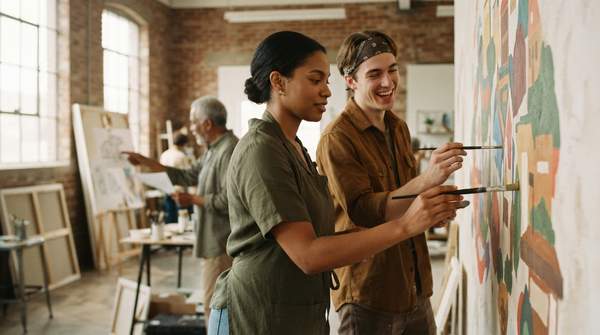
The third model moves participation into the making itself. Writing for CODAworx, Matthew Bowdown's account — bylined Matthew Bowden — describes projects where community members physically construct components of the final work. In Houston's Alief neighborhood, the sculpture Folding Stories incorporated an intentional participatory fabrication component that provided employment while embedding lived experience into the piece, becoming, in the account's words, a "fabric-of-community: material, narrative and participation woven together."
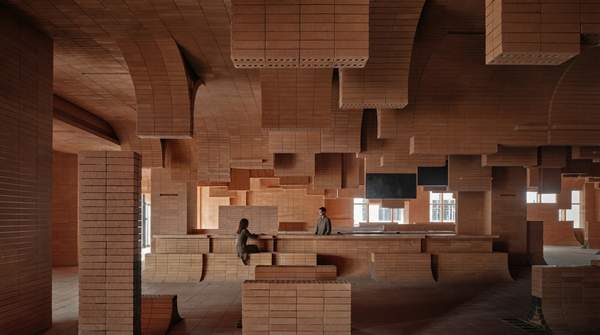
Other examples in the same account show the range of this model: Anne Labovitz's Well-Being Quilt in Rochester, Minnesota, is a participatory textile installation designed to bring community voices and creative agency into dialogue around health and connection; in another project, local participants of all ages worked with clay and composed ceramic fragments under the guidance of artisans and designers. Crucially, that project demonstrates that co-creation scales beyond simple crafts — it combined traditional craftsmanship with computational design, fostering collective authorship among residents even within a technologically complex installation. The community's role here is hands-on and directly inscribed into the physical artwork.
Comparative Models of Community-Engaged Public Art
The table below categorizes the three models by their method of community participation — distinguishing input-based, process-based, and creation-based approaches — so the differences in process, community role, and typical format can be seen at a glance.
| Model | Core Engagement Strategy | Community's Role | Example Project / Program |
|---|---|---|---|
| Participatory Planning & Budgeting | Residents provide input on collection diversity and gaps, and direct funds through participatory budgeting. | Primarily advisory and decision-making at a programmatic level, including balanced selection committees. | Chicago public art projects developed through participatory budgeting, highlighted by the Rogers Park Business Alliance. |
| Artist-Led Interventions | Artists lead temporary art, convenings, and interventions designed to surface community values through shared activity. | From passive viewers toward co-authors through active participation in development and activation; process-oriented and temporary. | NYC's Public Art as Community Engagement (PACE) pilot, run by the Department of Cultural Affairs. |
| Direct Co-Creation / Participatory Fabrication | Community members create components of the artwork hands-on, embedding personal narratives and lived experience. | Hands-on making that directly contributes to the physical artwork, guided by artists and artisans. | Folding Stories in Alief, Houston; the Well-Being Quilt in Rochester, Minnesota; a community co-created ceramic installation. |
The Spectrum of Engagement
What the comparison makes visible is a spectrum of community power rather than a binary between "engaged" and "not engaged." At one end sits input on finished ideas — the top-down commissioning that, per the FLYMiamiArt commentary, treats input as a formality after real decisions are made. Budgeting and selection committees move further along: residents help decide what exists in their neighborhood, though the object is still made by professionals. PACE-style interventions shift the community's position again, replacing comment mechanisms with convenings and temporary activations. At the far end, participatory fabrication dissolves the boundary between audience and maker — the work's material record is the community's own.
The placement on this spectrum shapes outcomes that are observable rather than aesthetic: who feels ownership, whose story is embedded in the material, and whether the engagement outlives the installation. Community participation, as the CODAworx account puts it, "transforms public art from a static object into a living record of shared experience."
Selecting an Engagement Model for Public Art
When planning a public art initiative, communities and artists should choose an engagement model that aligns with their desired level of community involvement, from advisory input to direct co-creation. The trade-offs are practical: budgeting and selection models are durable and institutional, suited to permanent collections and equity audits; artist-led interventions are lighter and temporary, useful for discovering what a neighborhood values before committing capital; co-creation demands the most from participants and organizers alike, but embeds lived experience directly in the work — and, as in Alief, can even provide employment. Notably, the evidence here describes processes and formats; it does not establish comparative measurements of community well-being or social cohesion between the three models.
The chosen model's success can be observed by the degree of community ownership and active participation in the art process and its outcomes — for instance, whether residents sit on the selection committee, attend the convenings, or leave their own hands in the fired clay.