Curated maximalism works because it is abundance with an edit. Designers who embrace the style describe it as "intentional abundance" and "as intentional and curated as any other interior design trend," meaning every object earns its place through the story it tells, the color or texture it adds, and the way it relates to everything around it. The difference between a rich, personal room and a cluttered one is not how much you own—it is whether each piece passes a repeatable test of meaning, contribution, and placement.
What is Curated Maximalism?
Maximalism leans into a more-is-more mentality. Interior designer Megan Hopp, founder of Megan Hopp Design in New York, describes it as "a style and aesthetic that leans into the more-is-more mentality," embracing bold color, pattern, and layering to celebrate excess. But the critical qualifier, echoed across design writing, is that maximalism "isn't just piling everything into a room and calling it a day." The curated version is disciplined abundance.
What separates curation from accumulation is narrative. Writing for Catherine Jordan Design, Cathy Connon frames maximalism as "about telling the owner's personality and personal history"—and then immediately confronts the skeptics' question: "Isn't Maximalism all about stuff?" Her answer is that it is easy to get "lost in the bric-a-brac," and the distinction lies in how objects are selected and composed. A vintage chair from Copenhagen paired with sculptural modern pieces and sentimental finds becomes intentional abundance, as Kennyatta Collins describes for Residence Supply, because each element is chosen for the story it contributes rather than simply filling space.
The Four Building Blocks of a Maximalist Palette
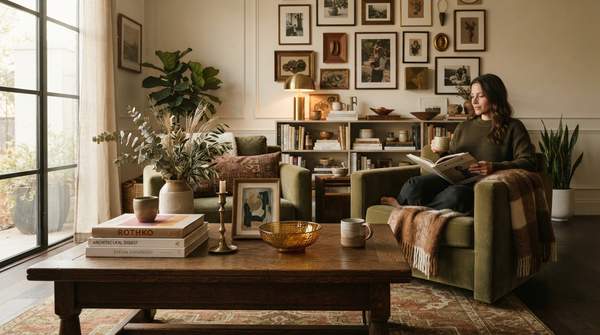
Design sources consistently identify a shared set of components that make a maximalist room feel rich rather than chaotic. Collins lists the key elements as personal storytelling through objects, mixing design eras and styles, rich color palettes, and layered textures. Architectural Digest's feature writers point to the same fundamentals—color, layering, and abundance—illustrated by rooms where patterned upholstery, metallic and wood tones, and a large-scale chandelier combine into a cohesive, dramatic whole.
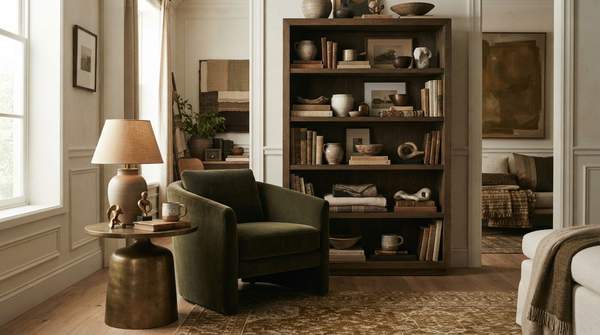
Each block does a different job. Personal objects carry meaning and make the room unmistakably yours. Mixing eras and styles—antiques beside contemporary fabrics, as in the layered spaces Connon describes—creates the sense of "evolving opulence" and a multi-faceted personality. Rich color palettes supply energy and movement; layered textures add depth so abundance reads as richness rather than noise. Critically, Architectural Digest notes that even the easiest maximalist vehicle, the bookshelf, "should still be curated intentionally with collectibles instead of adding clutter." The building blocks only work in combination—and only when edited.