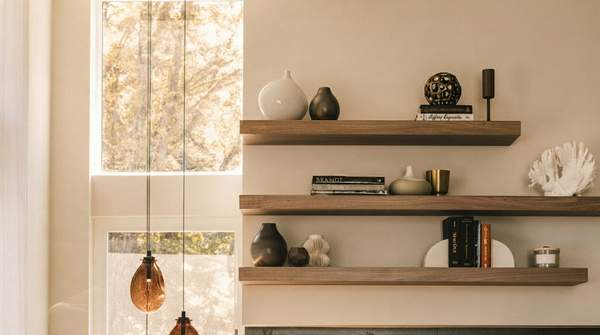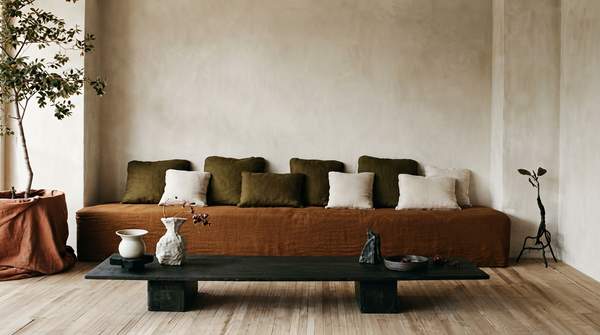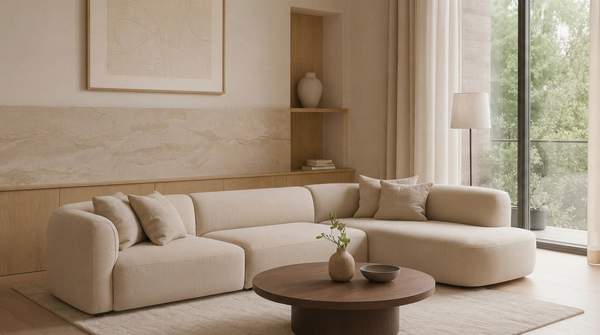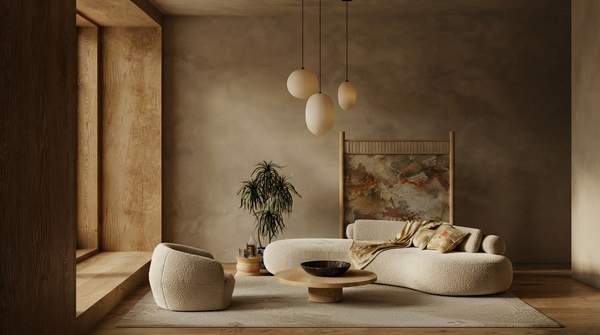
Hygge and lagom are not rival design philosophies, and treating them as a choice between the two is the fastest way to miss what each offers. Hygge, the Danish concept, is about emotional comfort—warmth, softness, and the enjoyment of small moments. Lagom, its Swedish counterpart, means "just the right amount," and it disciplines that comfort with balance and function. The most inviting Scandinavian-inspired rooms use lagom as the foundation and hygge as the warmth layered on top, so coziness never curdles into clutter.
Understanding Hygge: The Art of Emotional Comfort
Hygge is rooted as much in feeling as in objects. As Moving.com's Laura Mueller describes it, the Danish concept is "centered around making your home as warm and cozy as possible," and it is "incredibly personal"—attainable on any budget and within any broader style. What matters is that the home becomes a place you genuinely love to be.
In practice, hygge shows up in the senses. Planner 5D's guide to hygge decor identifies comfort as a fundamental principle: curling up with a book or watching a movie wrapped in a fluffy blanket, enhanced by adding pillows, throws, and anything that looks comfortable before you even touch it. Multiple light sources—ambient lighting in reading nooks and living rooms—create a soft, peaceful ambiance. Sentimental objects, from books to family heirlooms, add personal meaning.
Crucially, hygge also requires order. Mess and clutter, Mueller notes, "can interfere with your ability to really relax," which is why tidying and simple organization belong to the hygge toolkit as much as blankets do.
Embracing Lagom: The Philosophy of Functional Balance
Lagom translates as "just enough," "balanced," or "perfect-simple," in the words of Swedish-born interior designer Isabelle Dahlin, whom Sunset Magazine's Christine Lennon credits with bringing the term to design audiences. Dahlin describes it as a whole sensibility, not merely a decorating word—something you might say about coffee, milk, or how you feel, meaning "just right."
Applied to interiors, lagom is often described as Scandinavian minimalism with more warmth. One design publication characterizes it as the art of "not too little, not too much," more refined than hygge's layered look. Its guidelines are consistent across sources: neutral palettes in whites, greys, pastels, and earthy hues, with warmth built through tonal layers and textural natural materials rather than pattern mixes.
Function leads. Michael Cook of Cook Architecture, writing in Northern Virginia Magazine, recommends thinking about how a piece of furniture works, how a fabric feels, and how an object fills a space—because focusing too much on appearance produces a themed room, "the opposite of lagom."
Hygge vs. Lagom: Distinct Goals, Complementary Approaches
The two concepts are frequently framed as competitors—one Northern Virginia Magazine headline even declared lagom was "driving the final nail" into hygge's sheepskin-lined coffin. That framing overstates the tension. The Ledkia guide to Nordic style treats them as sibling ideas within one tradition: hygge as "emotional comfort, those little pleasures like an evening with blankets, coffee and good company," and lagom as "the perfect balance, 'neither too much nor too little,' applied to both decoration and daily life."
The distinction is one of goal, not taste. Hygge asks whether a room makes you feel content; lagom asks whether the room contains exactly what it needs. A space can fail either test independently—warm but chaotic, or pristine but sterile. That is precisely why they work together.
Integrating Hygge and Lagom for a Harmonious Home
The integration is a synthesis of their definitions rather than a formula handed down by any single authority, so treat it as a reasoning method. Start with lagom's structure: a neutral base, furniture chosen for how it works, and the discipline that every item owns a purpose and clutter stays out. Then add hygge's warmth selectively—soft furnishings, layered lighting, and a few sentimental pieces that carry genuine meaning.
The two principles reinforce each other. Hygge's own guidance holds that clutter interferes with relaxation, while lagom's insistence on purposeful ownership means the blanket on the sofa is there because it gets used, not because it photographs well. Planner 5D makes the same point from the hygge side: strategically select favorite decor pieces so they are functional and stylish, since "sometimes less is more" even in cozy design.
Hygge and Lagom: A Decision Framework for Your Home
Use this table to diagnose a room before you change anything. Identify which description matches how the space currently feels, then read across to the actions that address that specific lack. A room rarely needs only one column, but the diagnosis tells you where to start.
| Current room feeling | Design goal | Hygge actions (add coziness) | Lagom actions (add balance) |
|---|---|---|---|
| Sparse, cold, or unwelcoming; functional but nobody lingers | Emotional comfort and well-being | Add blankets, pillows, and throws; introduce multiple ambient light sources in living areas and reading nooks; display sentimental items such as books or heirlooms | Build warmth through tonal layers of neutral hues and textural natural materials rather than adding more objects |
| Cluttered, busy, or hard to relax in | Order and functional balance | Tidy on a regular schedule so everything has its place—hygge itself requires a clean space for relaxation | Ensure every item has a purpose; remove what does not; choose multi-functional furniture to make the most of the space |
| Styled but impractical; looks good, works poorly | Function over form | Keep only the soft furnishings and personal pieces you actually use and enjoy | Assess how each piece works, how fabrics feel, and how objects fill the space; avoid a themed look |
| Comfortable but visually heavy; too many layers | "Just the right amount" | Retain the coziest elements—the blanket you reach for, the lamp you read by | Reduce to a neutral palette of whites, greys, pastels, and earthy tones; let a few well-chosen pieces carry the warmth |
The framework's logic is simple: classify what the room lacks, then match the remedy to the philosophy that governs it. Comfort problems get hygge's sensory additions; excess and dysfunction get lagom's subtraction and purpose-testing.
Practical Steps to Achieve Your Balanced, Cozy Home
Work in lagom's order. First, edit: remove anything without a purpose, and tidy so every remaining item has its place. Second, choose function: when replacing or adding furniture, evaluate how it works and how it feels before how it looks, as Cook advises. Third, layer warmth: add soft furnishings and ambient lighting in the spots where you actually relax. Fourth, personalize sparingly: a book stack or a family heirloom carries more hygge than a shelf of generic decor.
Then test the result. Sit in the room at the hour you use it most. If it invites you to linger, hygge is present. If your eye rests easily and nothing needs moving, lagom is too.
Cultivating Your Balanced, Cozy Sanctuary
To create a home that embodies both hygge and lagom, consciously evaluate each design choice for its contribution to emotional comfort and functional balance, ensuring no element is "too much" or "too little." The measurable indicator is straightforward: the space feels inviting and comfortable without being cluttered, and every item serves a clear purpose or brings genuine joy. When both conditions hold, you have the Scandinavian balance neither concept achieves alone.
Sources
- How to Create a Hygge Home - Moving.com
- The Ultimate Guide to Hygge Decor for a Cozy Home — Decor and Interior Design Blog - Planner 5D
- Is Lagom the New Hygge? Why the Swedish Concept of "Perfect-Simple" Is a Design Strategy to Live By — Sunset Magazine
- How to bring ‘Lagom’ into your home — A D
- Follow these Tips to Style Your Home with Lagom — Northern Virginia Magazine
- How to master the Nordic style and create cozy spaces - Ledkia UK