Yes, you can have a home theater without a black rectangle dominating the room. Designers and installers describe several proven concealment routes—mirror TVs, motorized lift cabinets, art-frame TVs, and hidden projector screens—and each trades cost and installation effort for a different kind of visual calm. The right choice depends on whether you are retrofitting an existing living room or planning a build, and on whether you want the TV to disappear entirely or masquerade as a mirror or a painting.
The Design Challenge: Integrating Large Screen TVs Seamlessly
A wall-mounted or stand television is simpler to install and cheaper up front, which is why it remains the default. But the trade-off is real: the room ends up arranged around a black screen rather than around architecture, art, or a view, as the team at ACT Installs, a TV installation comparison service, puts it. Hidden TV options—lifts, mirrors, and art frames—cost more and demand genuine planning, but they return the wall to the room.
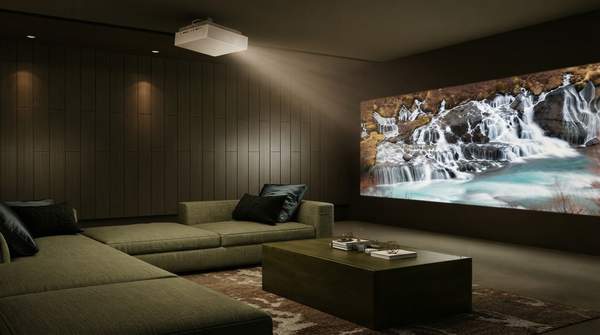
Interior design commentary makes the same point from the other direction. Writing for Country Living Magazine, designers surveyed by the magazine suggest that in homes where the TV placement debate never resolves—particularly around the mantel—a projector with a hidden drop-down screen can deliver a cinema-like experience without the permanent visual disruption of a fixed screen. Concealment, in other words, is less about hiding technology than about freeing a room from a single fixed focal point.
Mirror TVs: Blending Function with Reflection
A mirror TV is exactly what it sounds like: a fully functional mirror that transforms into a television when powered on, with the screen disappearing behind a reflective surface until entertainment is desired. MantelMount, which makes wall mounts and documents hidden TV options in a guide by Matt Lawler, notes this approach is especially popular in bedrooms, formal living rooms, and bathrooms, where a large black screen might feel intrusive.
The aesthetic payoff is the strongest of the four options: the room keeps a working mirror rather than a dormant device. Reflectel, a maker of hidden television frames, describes its Mirror TVs as turning into bespoke framed mirrors when switched off, adding elegance to living rooms, bedrooms, and gallery walls. That elegance has a price in coordination. Mirror installations typically involve custom sizing and wiring, and Reflectel positions its own support around working with AV integrators and interior designers—strong evidence that this is a professional-assist project rather than a weekend one, at least in typical configurations.