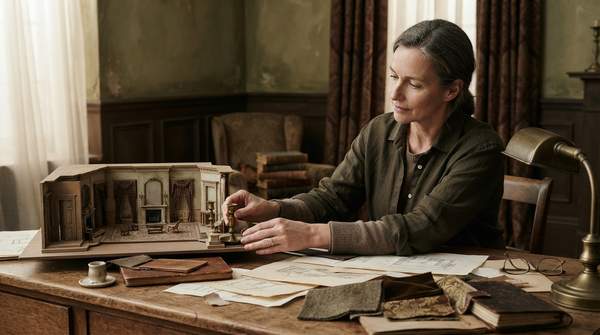
When a historical drama feels authentic, that feeling is not the byproduct of strict historical accuracy. It is the result of deliberate choices by production designers who weigh accuracy against the story, the director's vision, the mood of the film, and the blunt realities of budget. Designers themselves describe their job as keeping a balance, not obeying the historical record.
The Production Designer's Balancing Act: Authenticity as Creative Construction
The popular debate about period films often reduces to a single question: is it accurate? Practitioners reject that framing. Production designer Merlin Ortner puts it plainly: "It is our job as designers to keep the balance between historical accuracy and aesthetics." He argues against always sticking to the "this is right for the period" mindset, and instead keeping an open mind to work around accuracy from time to time.
That working-around can go surprisingly far. Ortner offers a concrete scenario: shooting in a medieval setting while the director wants a modern approach to the theme. In that case, he says, designers "can sometimes forget the historical accuracy completely to make the movie a whole" — to make the film exciting to watch while still staying in the period. The goal is coherence and feeling, not documentary fidelity.
Academic analysis of the genre supports this reframing. Because historical films are judged largely on the perception of accuracy rather than aesthetic criteria, as Jonathan Stubbs observes in scholarship on the genre, the designer's contribution becomes central. Michelle Pierson goes so far as to call the historical film the "production designer's cinema."