The best home theater audio setup is the one that matches your room first and your ambitions second. A soundbar suits small rooms, apartments, and anyone who wants a dramatic upgrade over TV speakers with almost no installation effort. A 2.1 system—two front speakers and a subwoofer—adds real stereo separation and bass for a modest step up in cost and wiring. A 5.1 system delivers true surround sound with speakers placed around the room, and Dolby Atmos configurations add height channels so effects like rain or aircraft feel genuinely three-dimensional. Each step up the ladder buys immersion, but costs you space, simplicity, and money.
Industry guides agree on the essential starting point: the room determines everything. As The Big Screen Store's 2026 setup guide puts it, before choosing a single piece of equipment, "understand your room"—its size dictates what kind of audio setup works and how the furniture should be arranged. This article walks through the four most common configurations and the trade-offs each one carries.
Key Factors for Choosing Your System
Four questions will steer almost every decision. How big is your room? A compact living space can be overwhelmed by a full speaker array, while a large or dedicated media room can leave a soundbar sounding thin. What is your immersion goal—simply better than TV audio, or a cinematic experience with sound moving around and above you? How much installation effort can you tolerate, from plugging in a single bar to placing and calibrating five or more speakers? And how visible do you want the hardware to be?
World Wide Stereo's design guide frames the choice as a direct trade-off: soundbars are best for "smaller rooms, apartments, simple upgrades," while surround systems suit "dedicated theaters, large rooms, maximum immersion." The same guide notes that soundbar wiring is minimal—often with a wireless subwoofer or rear speakers—whereas surround setups involve more wiring, though some wireless options exist. Your content matters too: dialogue-heavy viewing rewards a dedicated center channel, while action films and gaming reward true directional effects around the room.
Soundbar Systems: Simplicity and Space-Saving
The soundbar is the gateway upgrade, and its appeal is honest: one slim unit under the TV, minimal wiring, and a transformation of flat TV audio into something fuller and clearer. World Wide Stereo rates soundbar immersion as good, achieved through virtual surround, with some models adding real rear speakers or up-firing drivers for a basic sense of height. Dolby Atmos is available on many soundbar models, though in virtual or up-firing form rather than true discrete height channels.
Where the soundbar shines is integration. Its minimal footprint makes it ideal for apartments and smaller rooms where rear speakers are unwanted or impractical, and setup is rated as easy. The trade-off is the upgrade path: World Wide Stereo describes it as limited, whereas component systems are highly expandable. On price, the range varies significantly by features—CNET's 2026 roundup highlights a basic 2.1 soundbar at $140 as a standout budget pick, while RTINGS' soundbar testing spans models from under $100 to under $500, with premium Atmos-capable bars sitting higher still. For the renter or the minimalist, that flexibility is the whole point.
2.1 Channel Systems: Enhanced Stereo and Bass
A 2.1 system pairs left and right speakers with a single subwoofer, and World Wide Stereo calls it the "first audio upgrade" for both music and movies, delivering a big jump in clarity and bass compared with TV speakers. Ultimea's channel-comparison guide rates its installation complexity at the lowest tier—two speakers, a subwoofer, and a receiver are all you place and connect—and its surround experience at the lowest tier too. That is the honest characterization: this is a basic audio upgrade with genuine stereo separation and deep bass, but no true surround sound.
Space requirements sit in the middle ground: more than a soundbar, since you are positioning two speakers and a subwoofer, but far less than a full surround array. On budget, a complete 2.1 setup including a receiver is an estimated range rather than a quoted package price. Working from entry-level receiver pricing—Rob Boffard's receiver roundup for The Master Switch lists models like the Denon AVR-S570BT at $340 and the Sony STR-DH590 at $348—a full 2.1 system plausibly lands between roughly $300 and $700 once speakers and a subwoofer are added. Treat that as a component-based estimate, not a sticker price for a bundled kit.
5.1 Channel Systems: True Surround Sound
This is where home theater begins in earnest. A 5.1 system adds surround speakers at the rear or sides to the front pair, subwoofer, and—typically—a center channel dedicated to dialogue. World Wide Stereo positions it for "immersive movies, sports, gaming," with true directional effects moving around the room, and notes that a dedicated center channel delivers the best dialogue clarity of any configuration. Ultimea rates 5.1 as suited to medium spaces, with moderate installation complexity and a mid-tier surround experience, aimed at mainstream home theater users.
The costs are real in every sense. You need a room large enough to place speakers behind and beside the listening position, and the installation involves speaker placement plus calibration—what World Wide Stereo describes as moderate-to-advanced setup complexity with more wiring than a soundbar, though wireless options exist for some surrounds. A receiver is essential, and the same Master Switch receiver data shows Atmos-capable models spanning from around $340 to $1,600, a signal that the electronics alone can scale steeply. Precise all-in pricing for a 5.1 system varies too widely by component quality to pin down, but the structural lesson is clear: you are buying into an expandable ecosystem rather than a single box.
Dolby Atmos (5.1.2+): Immersive 3D Audio
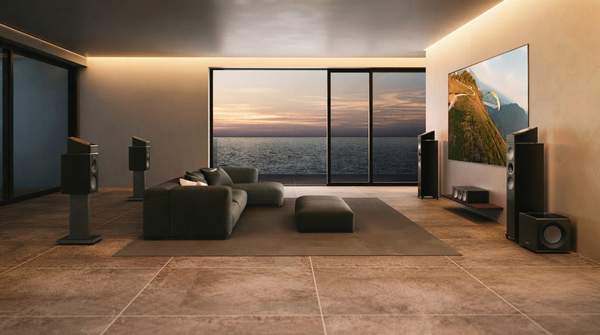
Atmos extends a 5.1 foundation with height channels—two in a 5.1.2 layout—so sound can move vertically as well as around you. World Wide Stereo describes the 5.1.2 step as "next level" cinematic immersion, where overhead effects like rain or aircraft feel three-dimensional, and notes that true height channels are possible only with discrete speaker systems, not virtualized soundbar versions. Larger configurations such as 7.1.4 add more surrounds and height channels for dedicated theaters and larger rooms, creating what the guide calls the best surround bubble and Atmos realism.
Ultimea's comparison places 7.1-class systems in large spaces with higher installation complexity and a top-tier surround experience, aimed at households with a large living room or dedicated media room and at gamers who want accurate rear sound positioning. The aesthetic question becomes most pressing here: height speakers may sit on top of floor-standing speakers, mount to the ceiling, or aim upward to bounce sound off the ceiling, and each choice changes both the room's look and the installation burden. Atmos demands the most space, the most planning, and the most budget of the four options—but it is the only path to genuinely three-dimensional sound.
Home Theater Audio System Decision Framework
The table below compares the four system types across the decision factors that matter most. Where a figure is an estimate built from component pricing rather than a quoted package, it is labeled as such; for 5.1 and Atmos systems, budget and space are given only in relative terms because they vary widely with component quality and room design.
| System Type | Immersion Level | Space Requirement | Installation Complexity | Typical Budget Range (Audio Only) |
|---|---|---|---|---|
| Soundbar | Good—virtual surround; some models add real rears or up-firing drivers for basic height effects | Minimal footprint; ideal for smaller rooms and apartments; often pairs with a wireless subwoofer | Easy—minimal wiring, sometimes wireless sub or rears | Basic 2.1 bars from about $140; feature-laden Atmos models cost substantially more |
| 2.1 Channel | Basic upgrade—better stereo separation and bass than TV speakers, but no true surround | Small spaces; more than a soundbar, less than full surround | Low—two speakers, a subwoofer, and a receiver | Estimated $300–$700 complete, based on entry-level receiver and component costs (not a quoted package) |
| 5.1 Channel | True surround—directional effects around the room; best dialogue clarity via dedicated center channel | Medium spaces—room to place rear/side surrounds | Moderate—speaker placement plus calibration, more wiring | Relative: mid-tier; receivers alone range roughly $340–$1,600 depending on features |
| Dolby Atmos (5.1.2+) | Top tier—adds height channels so overhead effects feel 3D; 7.1.4 offers the best surround bubble | Large spaces or dedicated media rooms | Advanced—height speaker placement and calibration on top of 5.1 demands | Relative: highest of the four; scales with receiver and speaker quality |
Reading the table as a decision path: the apartment dweller seeking a simple upgrade lands on a soundbar, accepting virtual immersion in exchange for a minimal footprint and easy setup. The music-and-movie listener in a small space who wants genuine stereo and bass steps up to 2.1. The mainstream movie, sports, and gaming household with a medium room and tolerance for wiring chooses 5.1. The homeowner building a dedicated media room, or the gamer who wants accurate rear positioning and overhead effects, commits to Atmos.
Making Your Choice: A System for Every Scenario
Select the home theater audio system that best balances your desired immersion, available space, comfort with installation, and budget. The pattern across every guide is consistent: each step from soundbar to 2.1 to 5.1 to Atmos buys a more convincing illusion of being inside the sound, and each step charges for it in square footage, wiring, and dollars. There is no wrong rung on the ladder—only a mismatch between a system and its room.
You will know the decision is made when you have identified a system type—Soundbar, 2.1, 5.1, or Dolby Atmos—that aligns with your primary room and budget constraints. Write down your room size, your ceiling height, and your wiring tolerance before you shop, and the right row of the framework above will select itself.
Sources
- Home Theater Design Guide: Creating the Ultimate Sound Experience — World Wide Stereo
- Best Home Theater Systems of 2026 - CNET
- The 5 Best Soundbars of 2026 — RTINGS.com
- How to choose a home theater sound system? Differences between 2.1, 5. — Ultimea
- Best 5.1 Home Theater Systems of 2024 — Themasterswitch